by Carrie Wells, Ed.D.
We decided it was holiday time in our home! One of the first things I do at the start of each month is switch out the books in our bookcase so that they match the new theme.
Then I placed new holiday items in our Discovery Bin. Lydia really loved the small cat dressed as a reindeer that plays music.
Then we made a handprint Christmas tree. This project really got Lydia using a lot of language. She described each pom pom we placed on the tree by telling me the color and size (little/big).
We were supposed to get a tree this weekend, but we got caught up doing other things, so we'll definitely have to get it one day this week. I'm excited to put up all of the decorations...and make some new ones!
Showing posts with label books. Show all posts
Monday, November 28, 2011
Saturday, October 1, 2011
Guidecraft Educator Review #3 ~ Universal Book Display & Storage
by Carrie Wells, Ed.D.
This month, the Guidecraft Educators are reviewing the Universal Book Display & Storage. This two-sided bookcase has storage space for standard-sized board books, paperback books, and hardcover books on one side and storage space for big books on he other side. What I love most about this book storage is that it is not just a traditional bookcase where you just see the binding of the books. This book storage allows you to display the entire cover of the book, which is a great way to entice early learners! They love to look at the colorful illustrations on the front of each book.

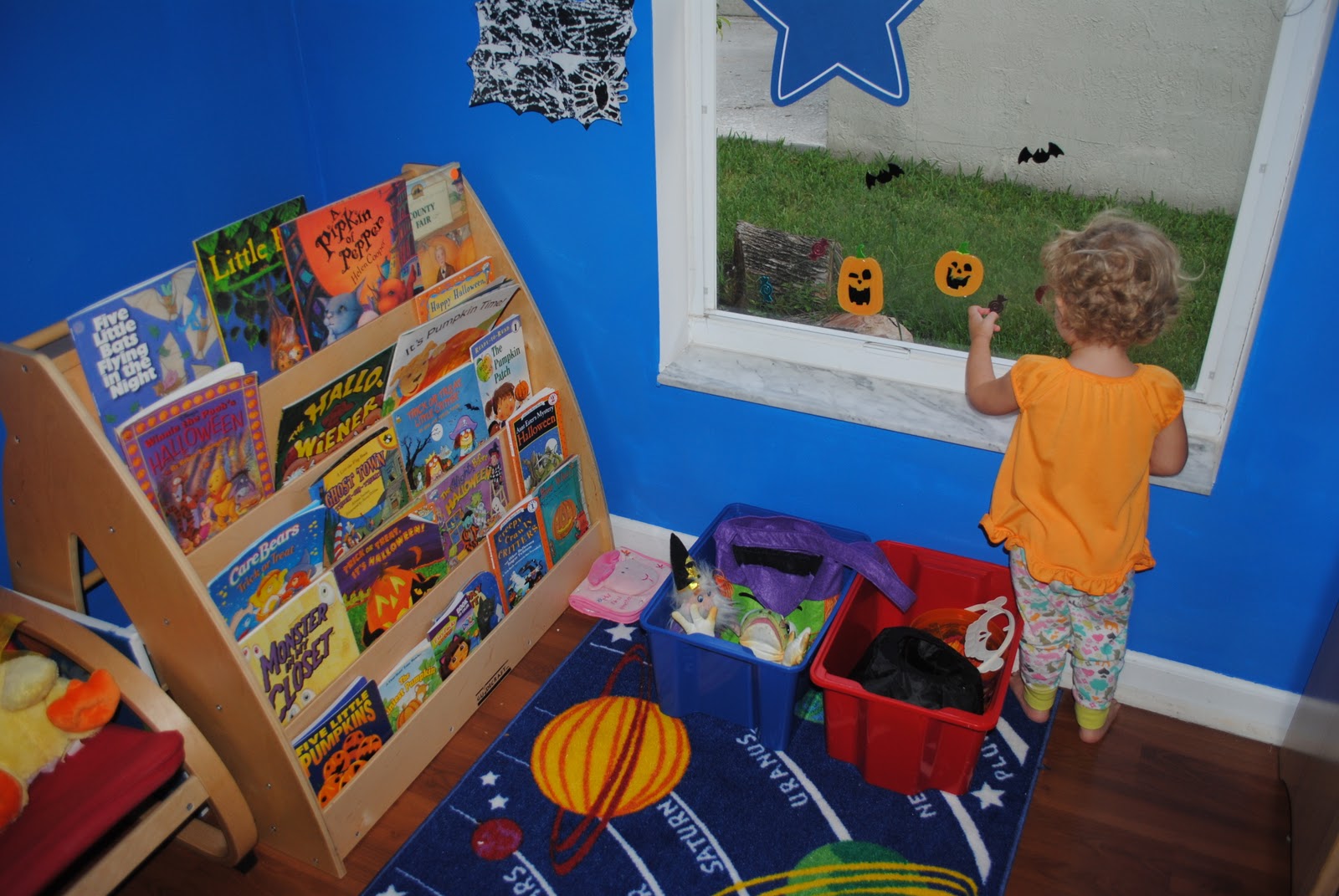
The Universal Book Display & Storage is constructed of sturdy birch ply wood and weighs 40 pounds. It took approximately a half-hour to assemble. This book storage goes very nicely with the Guidecraft Nordic Rocker I reviewed in August. Here are some pictures of our library.
I like to change the books in my children's library each month based on the season/holiday or a given theme. This month's theme is Fall/Halloween. I was able to display 22 books. Next to the book storage, I placed two bins of themed items to explore before, during and after reading. One bin has synthetic fall leaves and wiggly creatures (plastic bugs and spiders). The other bin has some Halloween plush characters, like a wizard, witch, and frog. Because of the neutral design and color, I am able to 'dress up' the book display & storage to go with the theme as well. We are going to add some spider webs later.
BUY IT! You can purchase this well-designed, two-sided Guidecraft Universal Book Display & Storage for your home or classroom library for just $200.
WIN IT! What's great about this Guidecraft Educator group is that each month, one of us will be hosting a giveaway of the product that we have all reviewed. Visit Mommy PR for a chance to win a Universal Book Display & Storage for your child. This contest is open to the US and Canada.
* I received the aforementioned product for free to review. The opinions expressed are honest and provided without monetary compensation.
Thursday, September 1, 2011
The ABCs of Teaching Preschoolers ~ L is for Library
by Carrie Wells, Ed.D.
Introduction by Deborah Stewart, M.Ed. of Teach Preschool:
This post is to celebrate the 20,000 members who have joined Teach Preschool on Facebook and the wonderful bloggers who share their amazing ideas and insights each day. As a special thank you to each of you who care for and educate our youngest learners, the bloggers and I have put together "The ABC's of Teaching Preschoolers". Be sure to visit my fellow bloggers and check out the fun and insightful tips they have prepared especially for you.
The letter I chose is 'L' for 'Library'. A library, whether in your home or classroom, is so much more than just a collection of random books thrown on a shelf. An early learning library should inspire children to want to explore stories, ask questions, manipulate items, and use their imaginations.
Here are some suggested supplies/materials to start your classroom or home library for your young learners:
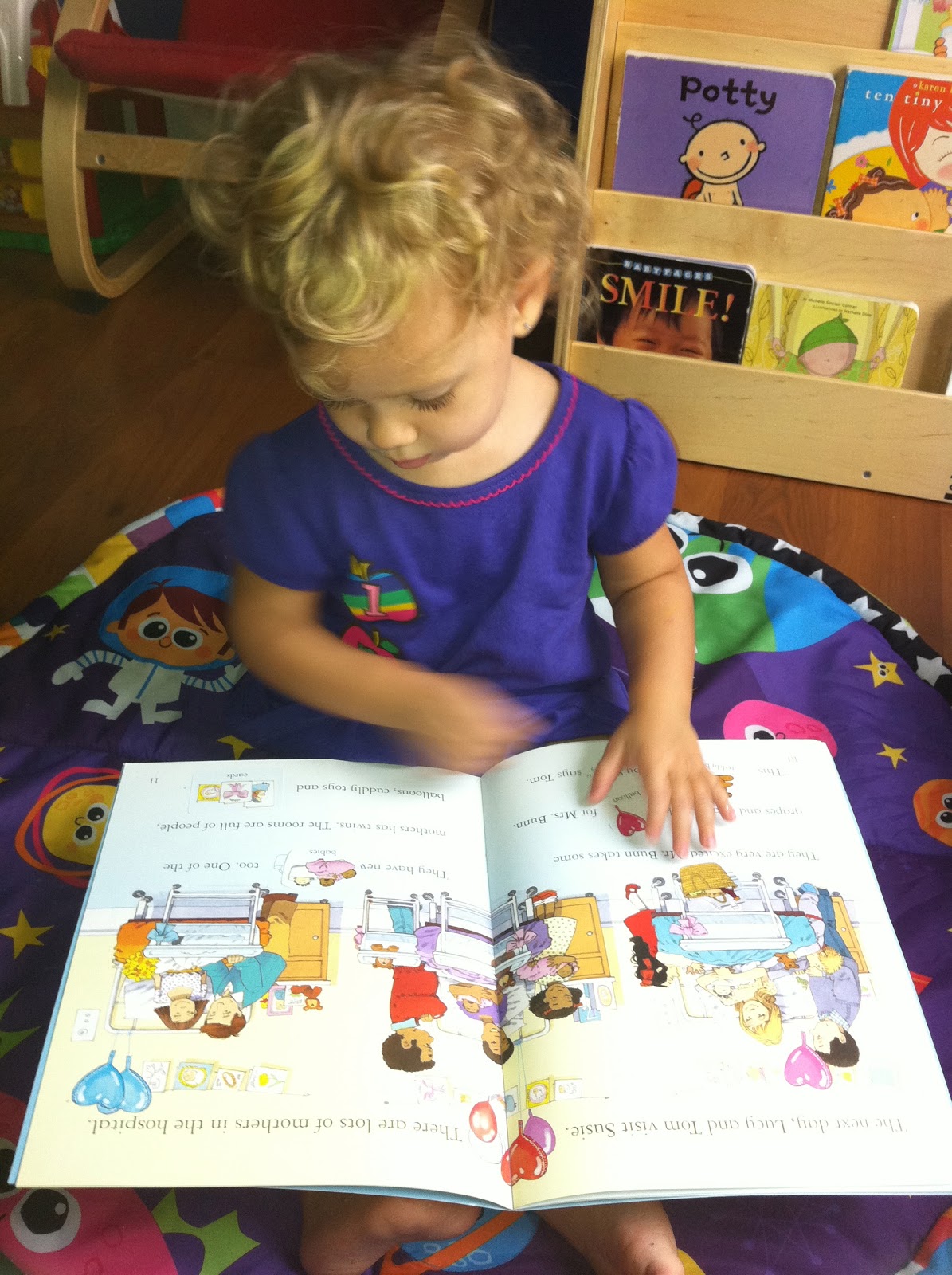
A variety of books: Books can be organized by theme, a child's interests, or a certain sound you are focusing on teaching. I suggest including pop-up books, books with sounds, paperback, board books, hardcover books, books with stickers, books on tape/CD, big books, etc. I am expecting baby #2 in just 3 weeks, so all of the books in my daughter's library are about babies and big sisters.
Themed objects: If you choose books with a particular theme, put together a basket of items that go with that theme. This allows the child(ren) to explore the same topic in a variety of ways! I put a basket full of baby dolls next to the library for Lydia to play with while looking at books.
Manipulative toys: Included within a library can be felt storyboards, alphabet puzzles, magnetic letters, letter/word games, puppets, dress-up clothes, and other literacy-related items. These objects allow young children to practice early literacy skills beyond just looking at books.
Photo albums: This is a great way to personalize a library. Include pictures of your child(ren), family members, favorite toys, animals, transportation, etc. Anything that can stimulate interest and conversation. The children can also use personal photos to make their own books that can be placed in the library.
Seating options: Children should be able to sit comfortably while engaging in literacy activities. Your library may include area rugs, table/chairs, bean bags, rockers, pillows, blankets, and any other comfy seating options for little ones.
Organization: It's important to keep items within the library well-organized and easily-accessible. You want children to be able to reach everything to explore objects and books independently. It helps to label containers with pictures or words and to have a variety of colorful bins/baskets for easy clean-up.
Writing area: After reading books and looking at pictures, children may want to draw pictures and write their own stories. Place paper and age-appropriate writing utensils in an area that is accessible to the child(ren). I like the Crayola Pip-Squeaks for ages 2 to 4.
Whether you are building a library for your preschool-age child at home or your students at school, remember to personalize the books, activities, toys, and decor. Young children love seeing their favorite books in the library, their artwork posted, and their favorite toys within reach!
Introduction by Deborah Stewart, M.Ed. of Teach Preschool:
This post is to celebrate the 20,000 members who have joined Teach Preschool on Facebook and the wonderful bloggers who share their amazing ideas and insights each day. As a special thank you to each of you who care for and educate our youngest learners, the bloggers and I have put together "The ABC's of Teaching Preschoolers". Be sure to visit my fellow bloggers and check out the fun and insightful tips they have prepared especially for you.
The letter I chose is 'L' for 'Library'. A library, whether in your home or classroom, is so much more than just a collection of random books thrown on a shelf. An early learning library should inspire children to want to explore stories, ask questions, manipulate items, and use their imaginations.
Here are some suggested supplies/materials to start your classroom or home library for your young learners:
A variety of books: Books can be organized by theme, a child's interests, or a certain sound you are focusing on teaching. I suggest including pop-up books, books with sounds, paperback, board books, hardcover books, books with stickers, books on tape/CD, big books, etc. I am expecting baby #2 in just 3 weeks, so all of the books in my daughter's library are about babies and big sisters.
Themed objects: If you choose books with a particular theme, put together a basket of items that go with that theme. This allows the child(ren) to explore the same topic in a variety of ways! I put a basket full of baby dolls next to the library for Lydia to play with while looking at books.
Manipulative toys: Included within a library can be felt storyboards, alphabet puzzles, magnetic letters, letter/word games, puppets, dress-up clothes, and other literacy-related items. These objects allow young children to practice early literacy skills beyond just looking at books.
Photo albums: This is a great way to personalize a library. Include pictures of your child(ren), family members, favorite toys, animals, transportation, etc. Anything that can stimulate interest and conversation. The children can also use personal photos to make their own books that can be placed in the library.
Seating options: Children should be able to sit comfortably while engaging in literacy activities. Your library may include area rugs, table/chairs, bean bags, rockers, pillows, blankets, and any other comfy seating options for little ones.
Organization: It's important to keep items within the library well-organized and easily-accessible. You want children to be able to reach everything to explore objects and books independently. It helps to label containers with pictures or words and to have a variety of colorful bins/baskets for easy clean-up.
Writing area: After reading books and looking at pictures, children may want to draw pictures and write their own stories. Place paper and age-appropriate writing utensils in an area that is accessible to the child(ren). I like the Crayola Pip-Squeaks for ages 2 to 4.
Whether you are building a library for your preschool-age child at home or your students at school, remember to personalize the books, activities, toys, and decor. Young children love seeing their favorite books in the library, their artwork posted, and their favorite toys within reach!
Subscribe to:
Posts (Atom)